The Two-Year Runway: Managing Terminal Dilapidations on UK Commercial Leases

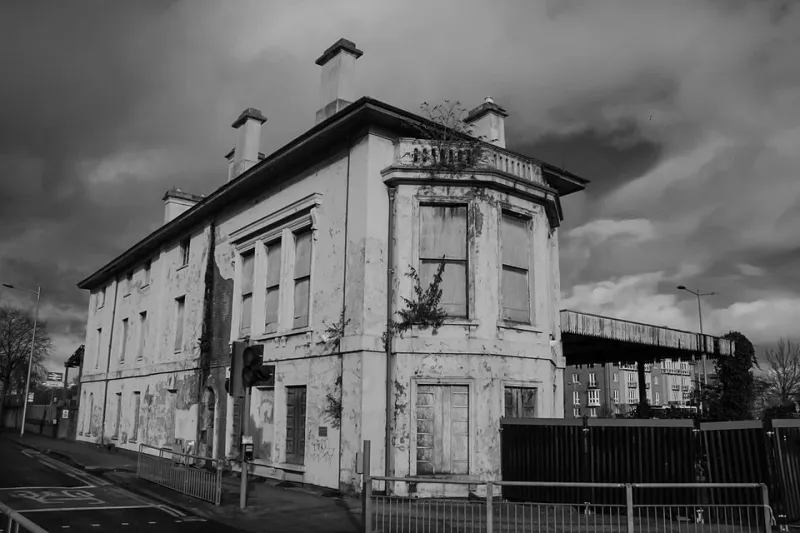
Photo: Kolforn (Kolforn) I'd appreciate if you could mail me ([email protected]) if you want to use this picture out of the Wikimedia project scope. This file is licensed under the Creative Commons Attribution-Share Alike 4.0 International license. Yo
A schedule of dilapidations seldom arrives quietly. For most occupiers it appears in the final year of the term, runs to several dozen pages, and attaches a figure that bears little obvious relation to the state of the premises. The understandable reaction is to treat it as a dispute to be won. The more effective response is to treat it as a project to be run — and to start running it two years before the term expires, not two months.
This note is written for occupiers rather than landlords: single-site businesses in Leeds city centre, and multi-site portfolios spread across London and the regions. The principles are the same in both cases, though the logistics differ considerably.
Why the final two years, and not the final two months
By the time a schedule is served, the occupier's leverage is largely a function of what it has already done. Repairs completed eighteen months earlier can be evidenced, priced and defended. Repairs still outstanding at expiry become a negotiating concession at best and a litigation risk at worst. The two-year window exists to convert a prospective liability into a controlled exit cost.
There is a second reason. Leases frequently oblige the tenant to yield up in repair, to remove alterations, and to redecorate — obligations that take time to procure, particularly where listed buildings, plant replacement or specialist trades are involved. A programme of works that would be straightforward across nine months becomes expensive and improvised when compressed into six weeks.
Reading the schedule: repair, reinstatement and decoration are different questions
A schedule of dilapidations is a list of allegations, not a finding. It should be read in three passes.
First, identify the repairing obligation itself. Is the lease full repairing and insuring, or is liability qualified by a schedule of condition? A schedule of condition is the single most valuable document in the occupier's file, and it is surprising how often it is mislaid. If one exists, the schedule must be tested against it item by item.
Second, separate repair from reinstatement. Repair returns the premises to the physical condition the lease contemplates; reinstatement requires the removal of alterations the tenant has made and, often, restoration of the original layout. These attract different costs, different evidence and, critically, different legal defences.
Third, isolate decoration and any purely cosmetic obligations. These are usually the cheapest items to discharge and the easiest to resolve early.
The statutory limits worth knowing
Two provisions do much of the work in narrowing a claim. Section 18(1) of the Landlord and Tenant Act 1927 caps damages at the diminution in the value of the landlord's reversion — a tenant is not obliged to pay for works that would add nothing to the property's value. The same section contains a proviso: where the landlord intends to demolish or reconstruct, and would not do so but for the tenant's obligations, the cost of reinstatement is not recoverable. Evidence of a forthcoming planning application or a redevelopment intention is therefore worth securing early.
In addition, the Pre-Action Protocol for claims relating to the physical state of commercial property at tenancy end requires a quantified demand and a reasonable opportunity to respond. A schedule served without figures, or served very late, is vulnerable on that basis.
Building the evidence file
The occupier's case is documentary. Three categories of material repay the effort involved in assembling them:
- Photographic evidence, dated and contextualised. Photographs taken at the start of the two-year window, and again after each programme of works, are far stronger than a scramble of images taken at expiry. Where possible, have them countersigned or at least timestamped and referenced to specific schedule items.
- Maintenance records and invoices. A service history for heating, ventilation and plant demonstrates that the tenant maintained as required, and is often decisive where a landlord alleges neglect rather than mere wear.
- Correspondence with the landlord. Reports of defect, requests for access, and notices of intended works all show a tenant behaving reasonably. They also pre-empt the argument that damage was left unaddressed.
The division of labour between solicitor and surveyor
A dilapidations claim is usually resolved by a chartered building surveyor negotiating with a counterpart, with the solicitor supervising the legal framework. Occupiers who bypass the surveyor and argue the schedule themselves tend to concede points of quantum that were never necessary; those who bypass the solicitor sometimes settle away defences, such as the section 18(1) proviso, that were worth more than the negotiation saved.
Sequencing the negotiation
Positions harden once a formal schedule has been served and a response deadline has been set. The productive window is earlier. A tenant that approaches the landlord twelve to eighteen months before expiry, with a proposed programme of works and a request to agree scope, will often secure a narrower and cheaper outcome than one that waits to be served.
Where the claim is contested, interim schedules and early without-prejudice discussion frequently resolve matters at a fraction of the scheduled figure. Litigation over terminal dilapidations is slow and expensive for both sides, and landlords know it.
Multi-site portfolios and the Leeds–London contrast
For occupiers with several premises, the discipline is one of synchronisation. A portfolio-wide review should record, for each property, the expiry date, the existence and content of any schedule of condition, the outstanding capital works and the landlord's known intentions. A single tracker of this kind prevents the common failure mode in which attention goes to the largest or most recent site while a smaller lease expires unreviewed.
Practically, Leeds and London present different pressures. London landlords tend to have professional asset management teams and serve schedules promptly; the negotiations are accordingly formal, and evidence is expected. Leeds and the wider regional market often involve smaller landlords, where early and direct discussion can be more fruitful — but also where documentation is thinner and the schedule of condition may never have been properly completed at grant. Both situations reward the same discipline: establish the facts early, and put them in writing.
A workable sequence
Months 24 to 18: commission a lease review and condition survey; locate the schedule of condition; commission current photography.
Months 18 to 12: complete outstanding repairs and decoration; retain invoices; approach the landlord to discuss scope and intentions for the property.
Months 12 to 6: respond to any schedule served; obtain a quantified assessment; open without-prejudice discussions.
Final six months: resolve or narrow the claim; agree a documented settlement; retain the file.
Dilapidations are rarely enjoyable. They are, however, far more manageable as a planned exit than as a dispute fought on the last day of the term.